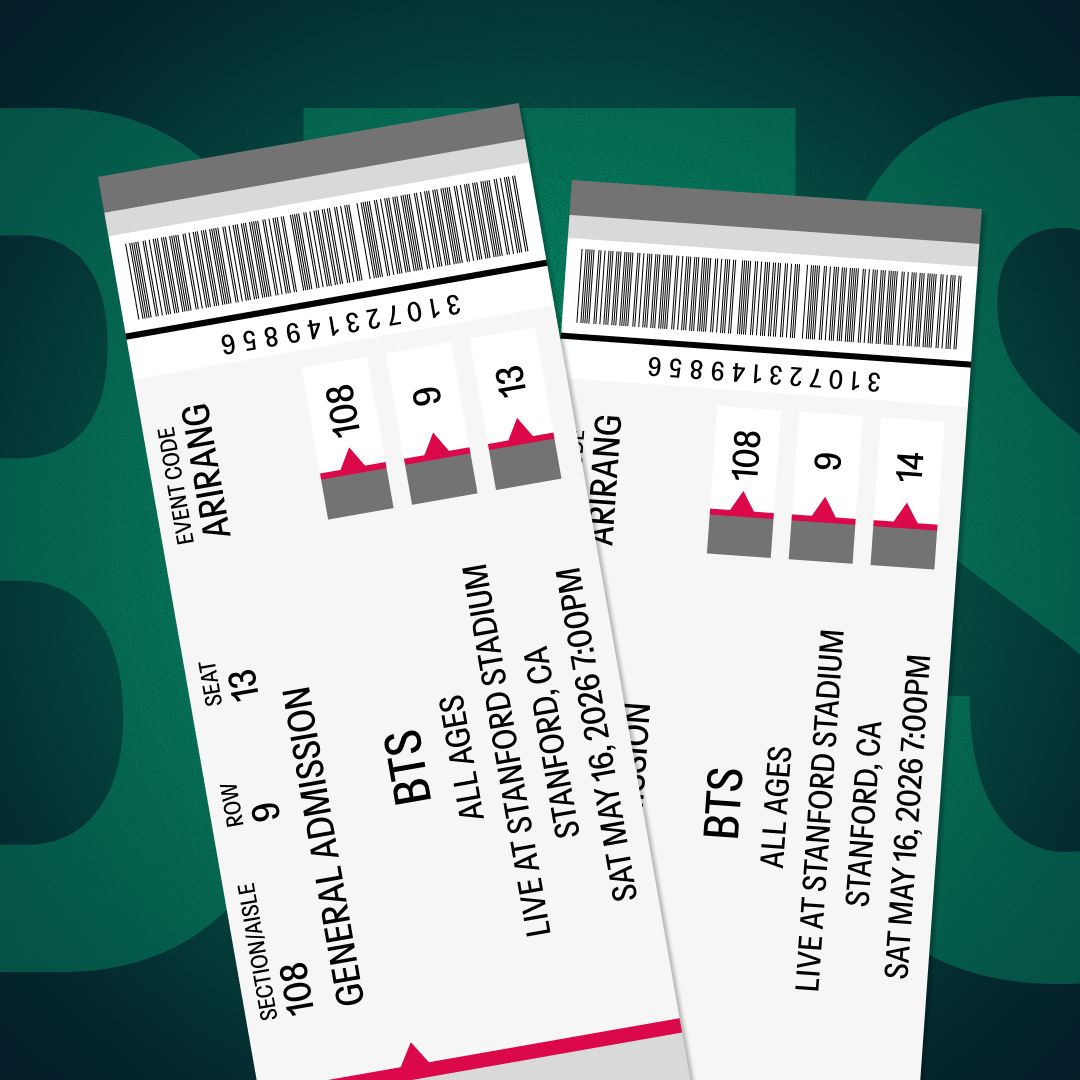
I Just Wanted to Sell My BTS Concert Ticket. AI Helped Me Avoid a Scam.
AI is amazing, especially when you’re in a crunch and you need to make a decision.
It’s not that you can’t use social media, YouTube, blog posts, Reddit threads, and a dozen different sources to figure things out. You absolutely can.
But when you’re in the middle of something, when you’re dealing with strangers, when the situation is moving fast, and when the people on the other side are professional scammers who know exactly how to entice you, how to push you, and which psychological levers to pull, you don’t have hours to go research.
And even worse: sometimes the things you already know are the things you forget in the heat of the moment.
That’s exactly the situation I found myself in.
When a Simple, Good Intention Gets Complicated
I had a BTS World Tour Arirang 2026 ticket that I might not be able to use, another post to discuss that in detail.
I didn’t want to scalp it. I didn’t want to make a profit. I just wanted to sell it at face value to a real fan, and ideally avoid the heavy fees that platforms like StubHub charge both buyers and sellers.
So I did what a lot of people do: I looked for a fan-to-fan resale group.
I found a Facebook group that looked active, full of posts, and well moderated. It felt like a reasonable place to start.
The First Moment Something Felt… Off
Almost immediately, an admin messaged me:, “We found a buyer for your ticket.” So far, so good. Then came the next message, “Before we proceed, you need to pay a refundable caution/protection fee.”
I paused.
In what normal transaction does the seller have to pay money in order to receive money?
They explained it would be refunded after the transfer. That it was just “how the group worked.”
That was the first quiet alarm bell.
The Process Started Feeling Scripted
When I asked about payment methods, they kept pushing: Venmo, Zelle, Chime.
They carefully avoided PayPal Goods & Services, one of the few options that actually provides real protection.
They even showed me a screenshot of the “buyer” conversation. The buyer was agreeable. A little too agreeable. Almost… pre-written.
It didn’t feel like two fans figuring out a transaction.
It felt like a workflow.
The Line That Crossed It
Then they tried to reassure me by sending an image of an unblurred government ID.
That’s when everything snapped into focus.
No legitimate person sends their full ID to strangers or uses that as “proof” in a ticket transaction. That’s a known social-engineering tactic. And suddenly, all the pieces lined up.
The Moment I Knew
When I said I wasn’t comfortable proceeding, the response wasn’t discussion or reassurance.
It was, “Okay, can you block me please.” That’s not how real people respond when a deal falls through. That’s how scripts end.
Stepping Back, the Pattern Became Obvious
What I was looking at wasn’t a one-off scam.
It was a system: a Facebook group with many “admins”, a fake buyer, a fake escrow story, a fake “refundable” fee, pressure toward irreversible payment methods.
If I had paid, I’m certain another “fee” would have appeared right after.
Why AI Quietly Changed the Outcome
Here’s the honest part. In that moment, I could have:
-
Spent hours going through Reddit threads
-
Watched YouTube videos
-
Read blog posts
-
Tried to remember every scam pattern I’ve ever learned
But this is exactly how mistakes happen:
You’re tired. You’re trying to be reasonable. You’re trying to do something good. And the other side is very, very practiced at pushing the right buttons.
Instead, I just laid out the situation, shared the screenshots, and talked it through with AI. Not emotionally. Not impulsively. Logically. Within minutes, the pattern was obvious.
This Isn’t About Replacing Human Judgment
It’s about supporting it.
When you’re in the middle of something you forget things. You rationalize. You second-guess your instincts. You talk yourself into “just this once”. AI, in this case, didn’t make the decision for me. It helped me see clearly.
The Real Lesson
I started this journey trying to avoid platform fees and help a real fan.
I ended it realizing how sophisticated and industrialized some scams have become. And also realizing something else. The future isn’t humans versus AI. It’s humans thinking better with AI, especially in moments that matter.
Final Thought
You can absolutely gather all this information yourself.
But when you’re under pressure, when time is limited, and when the people on the other side are trained to manipulate urgency and trust, having a calm, intelligent thinking partner can be the difference between:
“That almost happened to me” and “I wish I had been more careful.”
This time, I was.
If This Feels Uncomfortably Familiar…
You’re not alone. Most modern scams don’t look like “hacks.” They look like processes that almost feel normal until they’re not.
If you’re curious about using AI as a real decision-support layer across marketing, operations, and finance, feel free to reach out to me or the team at Walk West. A lot of what we do is helping organizations figure out where AI actually fits in their day-to-day work, not just where it sounds exciting.
Tiny Cultural Footnote (Just in Case)
Who is BTS?
If you’ve been on Planet Earth anytime in the last decade, you’ve probably heard of BTS. But just in case: BTS (Bangtan Sonyeondan) is a globally iconic South Korean pop group known for selling out stadiums worldwide, breaking streaming records, and having one of the most passionate fanbases on the internet (the ARMY). They’re not just a band, they’re a cultural phenomenon that blends music, performance, storytelling, and an almost unmatched global community.
Yes, this whole adventure started because of that BTS.